
Salmon Rice Bowl (Balanced, Fresh, and Built for Real Meals)

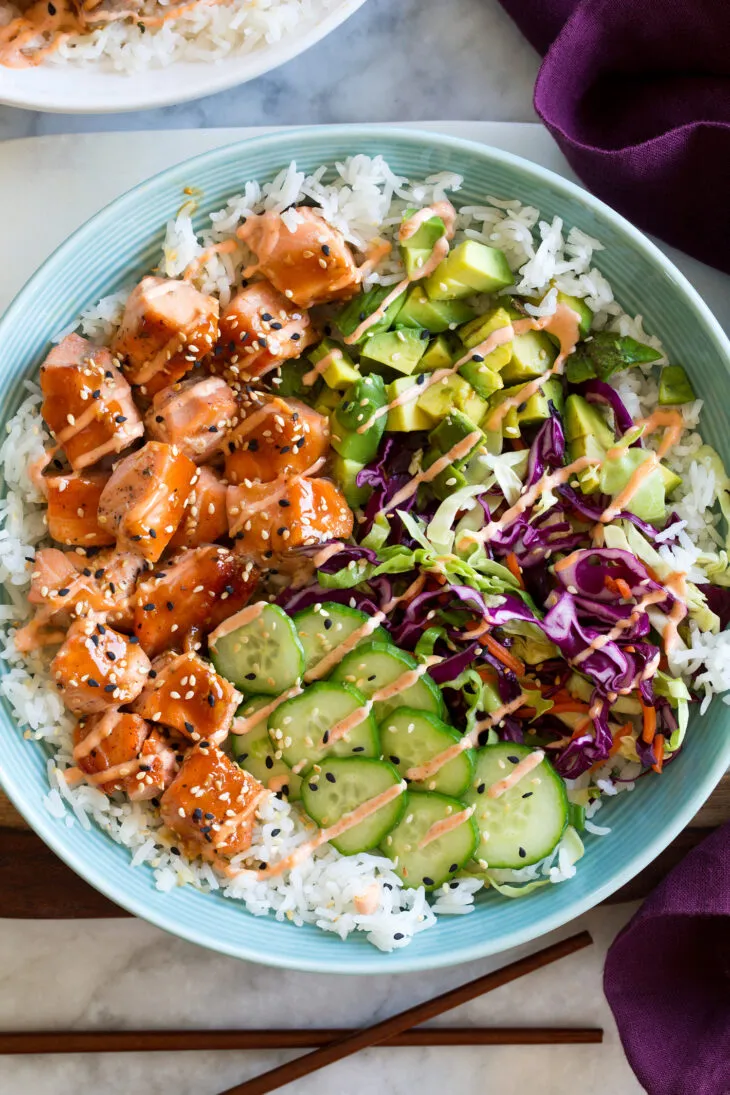
A salmon rice bowl works because it layers flavor and texture without overcomplicating anything. You get warm rice, flaky salmon, crisp vegetables, and a sauce that ties everything together. When assembled properly, each bite feels intentional instead of random.
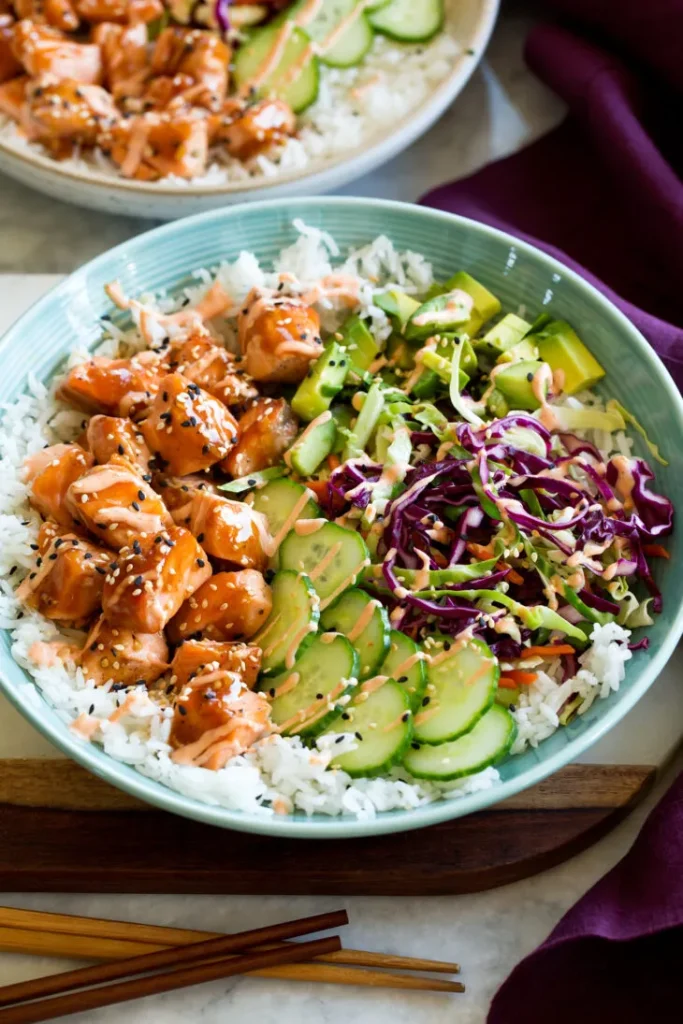
This recipe matters because bowls can easily turn into ingredient piles. Without structure, they taste flat or overly sauced. The key is contrast — warm and cool, rich and fresh, soft and crisp. Done right, a salmon rice bowl feels complete and satisfying without being heavy.
Why People Love It
This recipe works because the salmon is cooked simply and seasoned properly. It’s not buried in marinade or glaze. The rice is warm and slightly seasoned so it supports the bowl rather than acting as filler. The vegetables are kept crisp and fresh to balance the richness of the fish.
People love salmon rice bowls because they’re customizable without losing structure. They’re ideal for weeknights, meal prep, or quick lunches. You can adjust heat, add crunch, or swap sauces while keeping the foundation intact.
Flavor and Texture You Can Expect
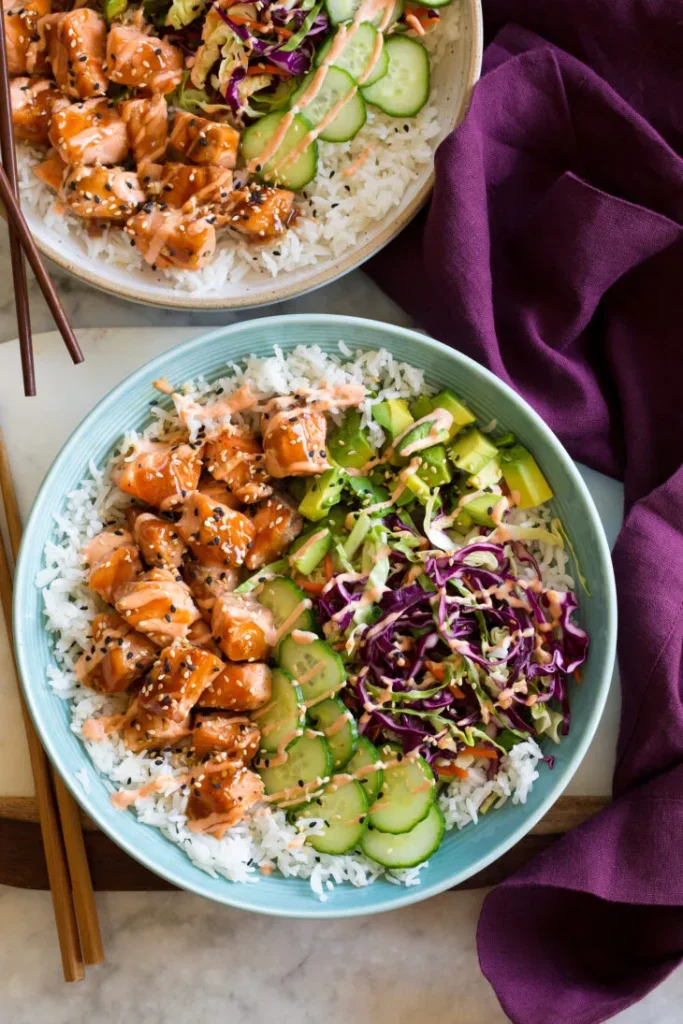
The flavor is savory with natural richness from the salmon. Soy sauce or tamari adds depth. A squeeze of lime or rice vinegar keeps the bowl from tasting heavy. A creamy drizzle adds smooth contrast without overwhelming the ingredients.
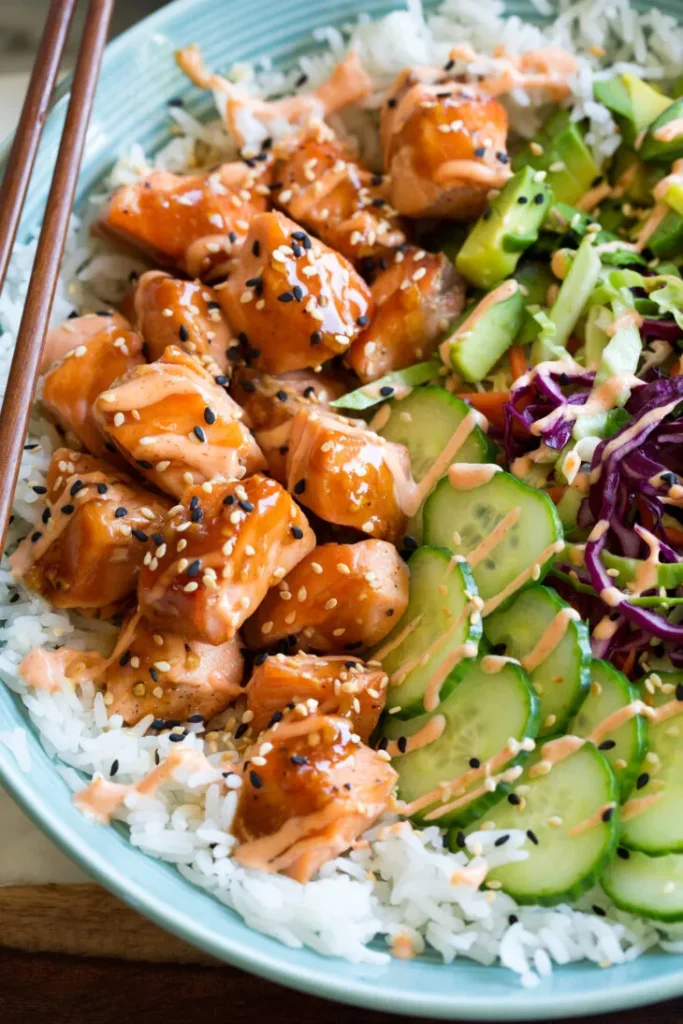
Texture is layered. The rice is soft and warm. The salmon flakes easily but stays moist. Vegetables like cucumber, carrots, or edamame bring crunch. A final sprinkle of sesame seeds adds light crispness.
Ingredients
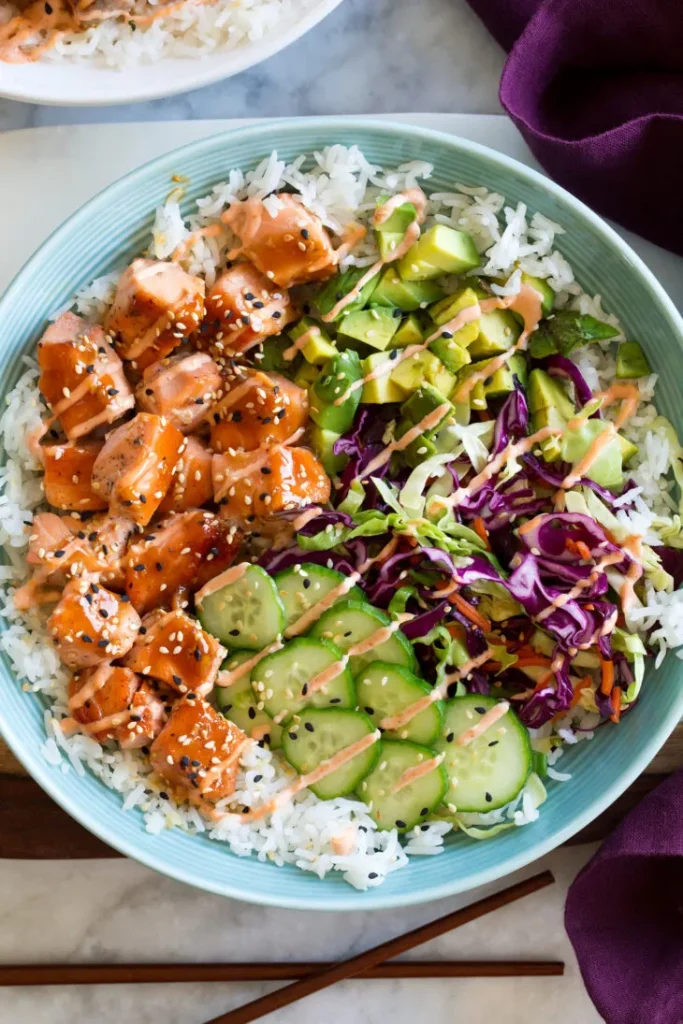
Salmon should be fresh and skin-on if possible for better cooking control. White or brown rice both work, but it should be cooked properly — fluffy, not sticky or mushy.
Soy sauce or tamari provides umami. Rice vinegar or lime juice adds acidity. Vegetables bring freshness and texture. Optional additions like avocado add creaminess, while sesame oil adds depth.
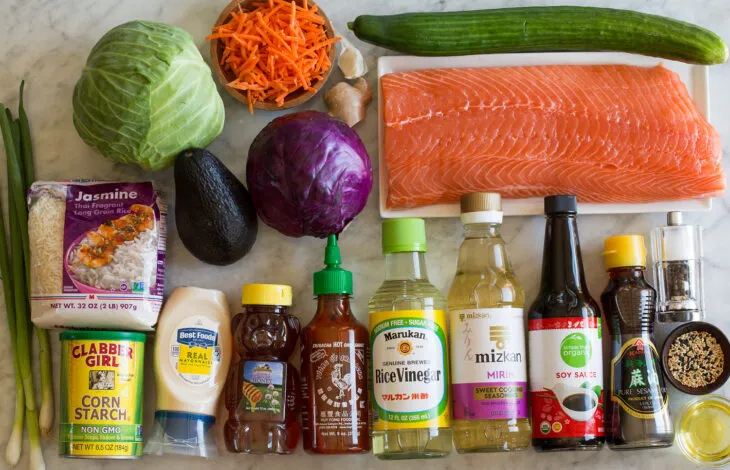
- Salmon fillets
- Cooked rice (white or brown)
- Olive oil or neutral oil
- Salt
- Black pepper
- Soy sauce or tamari
- Rice vinegar or fresh lime juice
- Cucumber, sliced
- Carrots, shredded
- Avocado, sliced (optional)
- Edamame (optional)
- Sesame oil (optional)
- Sesame seeds
- Green onions, sliced
How to Make Salmon Rice Bowl
Step-by-Step Instructions
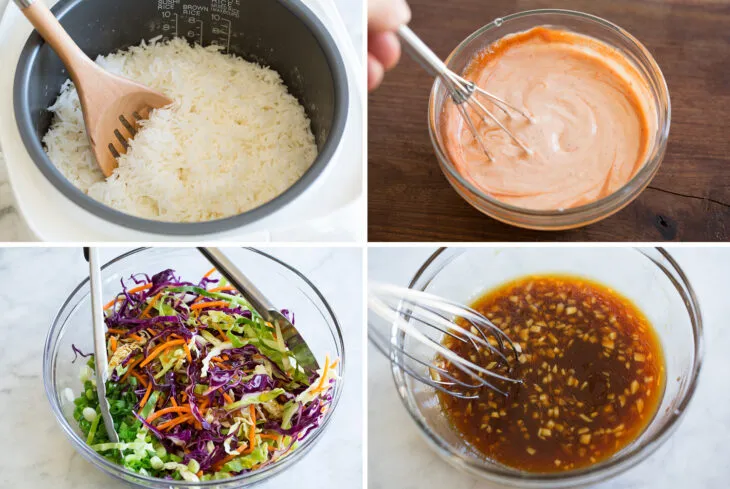
Step 1. Cook the Salmon
Preheat a skillet over medium heat. Season salmon with salt and black pepper. Add oil to the pan and cook salmon skin-side down for 4–5 minutes. Flip and cook another 2–3 minutes until just cooked through.
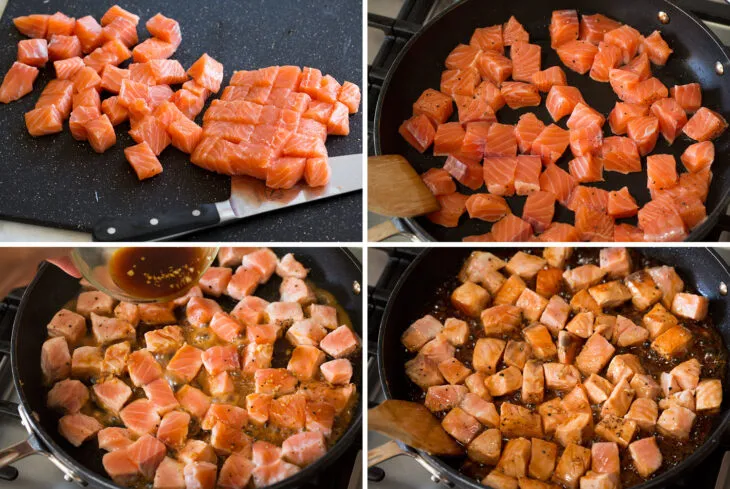
Step 2. Rest and Flake
Remove salmon from heat and let rest for a few minutes. Flake into large pieces.
Step 3. Warm the Rice
Heat cooked rice until warm and fluffy. Season lightly with a splash of rice vinegar or soy sauce if desired.
Step 4. Prepare the Vegetables
Slice cucumber, shred carrots, and prepare any additional toppings.
Step 5. Assemble the Bowl
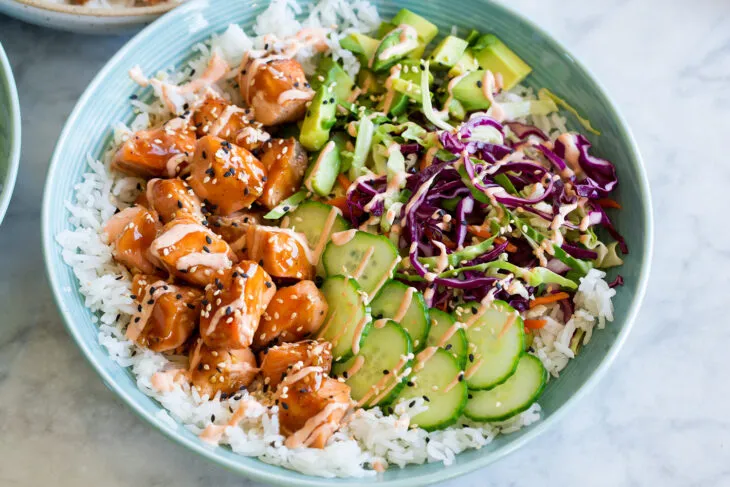
Add rice to the bottom of each bowl. Top with salmon, vegetables, and optional avocado or edamame.
Step 6. Add Sauce and Garnish
Drizzle with soy sauce or a light sesame dressing. Sprinkle with sesame seeds and green onions.
Step 7. Serve Immediately
Serve warm with fresh toppings for best texture.
Best Rice Options
Jasmine rice gives a soft, slightly fragrant base. Brown rice adds chew and nuttiness. Sushi rice works if lightly seasoned. Avoid overcooked or clumped rice — texture matters. If you prefer low-carb, cauliflower rice can be substituted, but it changes the structure of the bowl.
Sauce Ideas
A simple soy-lime mix works well. For creaminess, mix Greek yogurt or mayo with a bit of sriracha and lime. Keep sauce light — too much overwhelms the salmon.
Make-Ahead and Storage Tips
Salmon can be cooked ahead and stored for up to two days. Reheat gently or serve chilled. Rice and vegetables can also be prepped in advance. Assemble just before eating to maintain texture. Avoid storing fully assembled bowls — moisture softens everything.
Common Mistakes to Avoid
Overcooking salmon leads to dryness. Using too much sauce makes the bowl heavy. Skipping acid results in a flat flavor profile. Another mistake is overcrowding with toppings. Keep it balanced.
FAQs
Can I use leftover salmon?
Yes, flaked leftover salmon works well.
Is this served hot or cold?
It can be either, but warm rice with freshly cooked salmon is ideal.
Can I grill the salmon?
Yes, grilled salmon adds extra flavor.
Is this healthy?
Yes, it’s balanced with protein, carbs, and vegetables.

Salmon Rice Bowl
Ingredients
Equipment
Method
- Pat salmon dry and season both sides with salt and black pepper.
- Heat olive oil in a skillet over medium heat. Cook salmon skin-side down for 4–5 minutes. Flip and cook another 2–3 minutes until just cooked through. Remove and rest.
- Once slightly cooled, flake salmon into large pieces.
- Heat cooked rice until warm and fluffy. Lightly season with rice vinegar or a small splash of soy sauce if desired.
- Divide rice into bowls. Top with salmon, cucumber, carrots, and optional avocado or edamame.
- Drizzle with soy sauce and optional sesame oil. Sprinkle with sesame seeds and green onions.
- Serve immediately while warm for best texture.
Video
Notes
- Do not overcook salmon; it should flake easily but remain moist.
- Warm rice improves overall texture and balance.
- Keep sauce light to avoid overpowering the bowl.
- Components can be prepped ahead and assembled before serving.

