
Egg Roll Soup (All the Flavor, None of the Frying)

Egg roll soup takes everything people love about a classic egg roll and turns it into a warm, comforting bowl of soup. You still get savory meat, tender cabbage, aromatic garlic, and ginger—but without wrappers, deep frying, or mess. It is lighter than traditional takeout, quicker than rolling egg rolls by hand, and far more practical for everyday dinners.
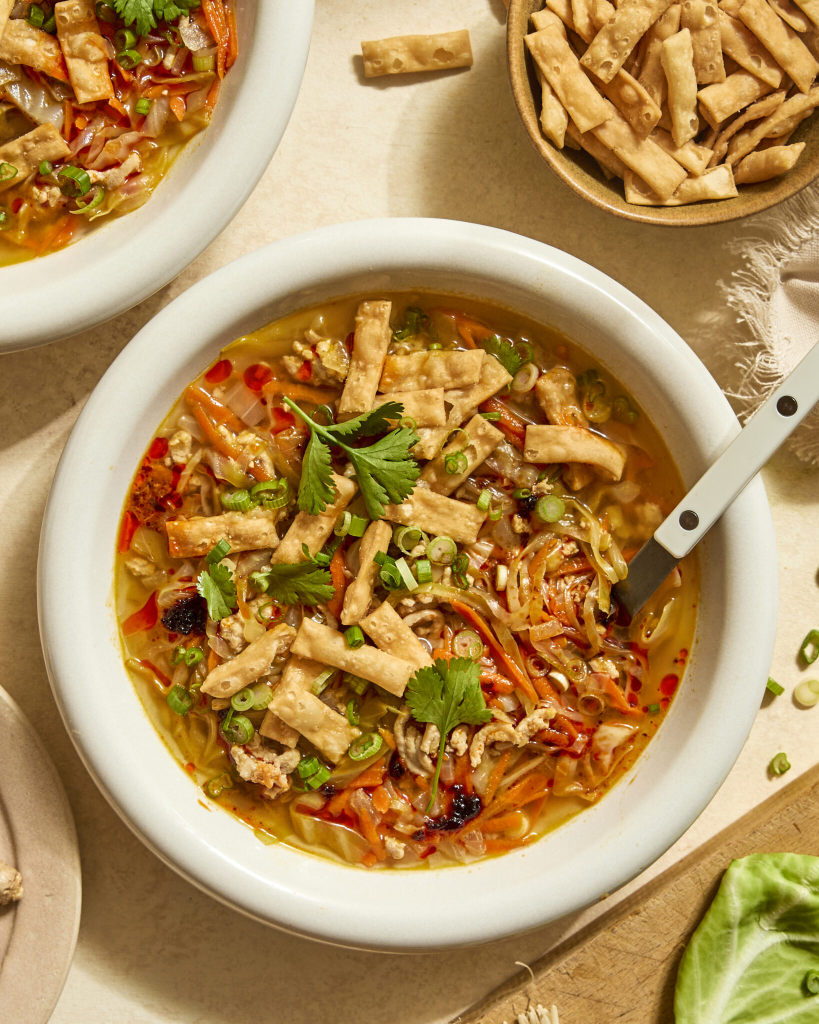
This soup is especially appealing because it feels familiar while still being fresh. The flavors hit all the right notes—savory, slightly sweet, and deeply satisfying—yet the meal itself feels balanced and nourishing. It is the kind of recipe that quickly becomes part of a regular rotation once you realize how easy and dependable it is.
Why This Recipe Works
Egg roll soup works because it focuses on flavor fundamentals instead of gimmicks. The base is built with garlic, ginger, and onion, which creates instant depth. Cabbage softens into the broth, adding body and subtle sweetness, while protein makes the soup filling enough to serve as a full meal.
Another reason this recipe succeeds is speed. Everything cooks in one pot, and most of the ingredients are chopped once and added in stages. There is very little room for error, which makes this soup ideal for busy weeknights or last-minute dinners.
Flavor and Texture You Can Expect
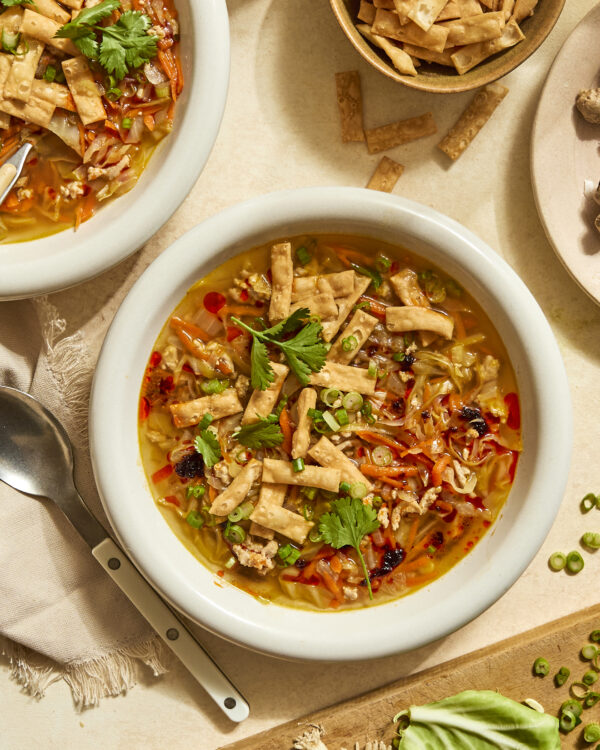
The flavor is savory and aromatic, with clear notes of garlic, ginger, and sesame. The broth is rich without being heavy, and the seasoning is balanced rather than salty. It tastes like an egg roll filling, just in spoonable form.
Texture is light but satisfying. The cabbage becomes tender without disappearing, the protein stays juicy, and the broth remains clear and comforting. Each bite feels hearty without being greasy or overwhelming.
Ingredients
Egg roll soup relies on simple, accessible ingredients, but preparation matters. Cabbage should be sliced evenly so it softens properly. Fresh garlic and ginger make a noticeable difference compared to powdered versions. Using low-sodium broth and soy sauce allows better control over salt levels.
This soup is flexible. You can use ground chicken, ground turkey, pork, or even keep it vegetarian with mushrooms.
- Ground chicken, turkey, or pork
- Green cabbage, thinly sliced
- Carrots, shredded or thinly sliced
- Onion, diced
- Garlic, minced
- Fresh ginger, grated
- Low-sodium chicken broth
- Soy sauce or tamari
- Sesame oil
- Olive oil
- Rice vinegar (optional)
- Salt and black pepper
- Optional green onions for garnish
How to Make Egg Roll Soup
Step 1. Cook the Protein
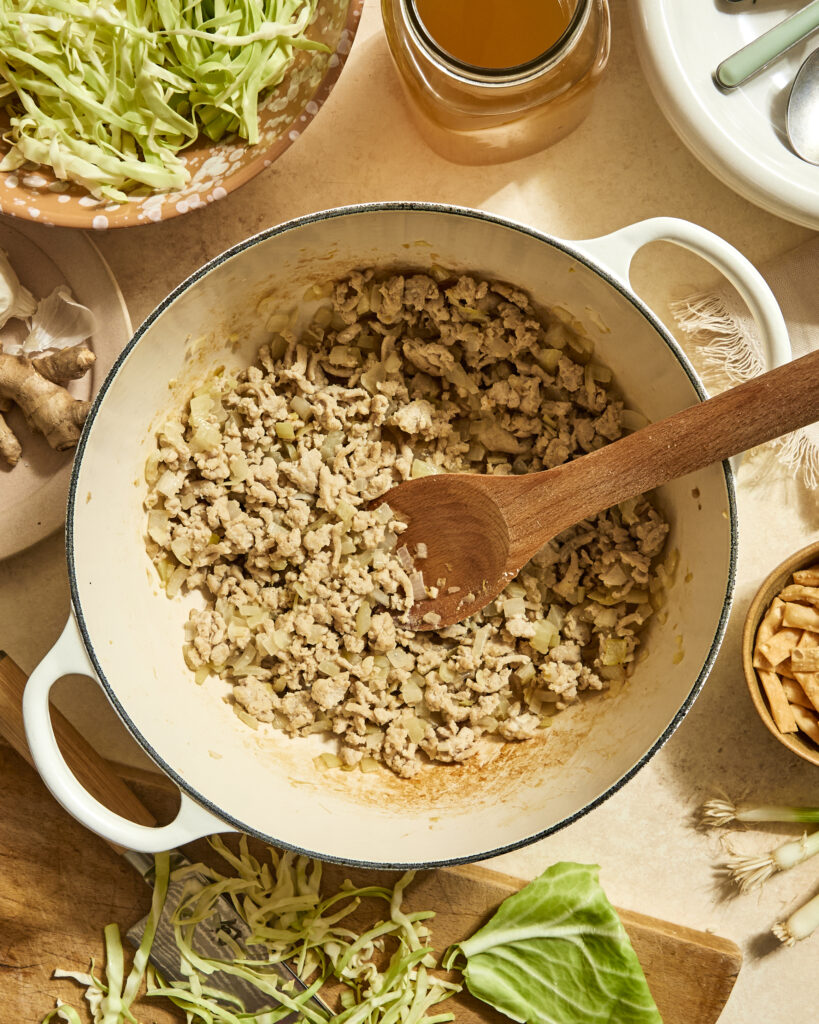
Heat olive oil in a large pot over medium heat. Add the ground meat and cook until browned, breaking it apart as it cooks. Remove excess fat if needed.
Step 2. Add Aromatics
Add onion, garlic, and ginger to the pot. Cook until fragrant and softened, stirring frequently.
Step 3. Add Vegetables
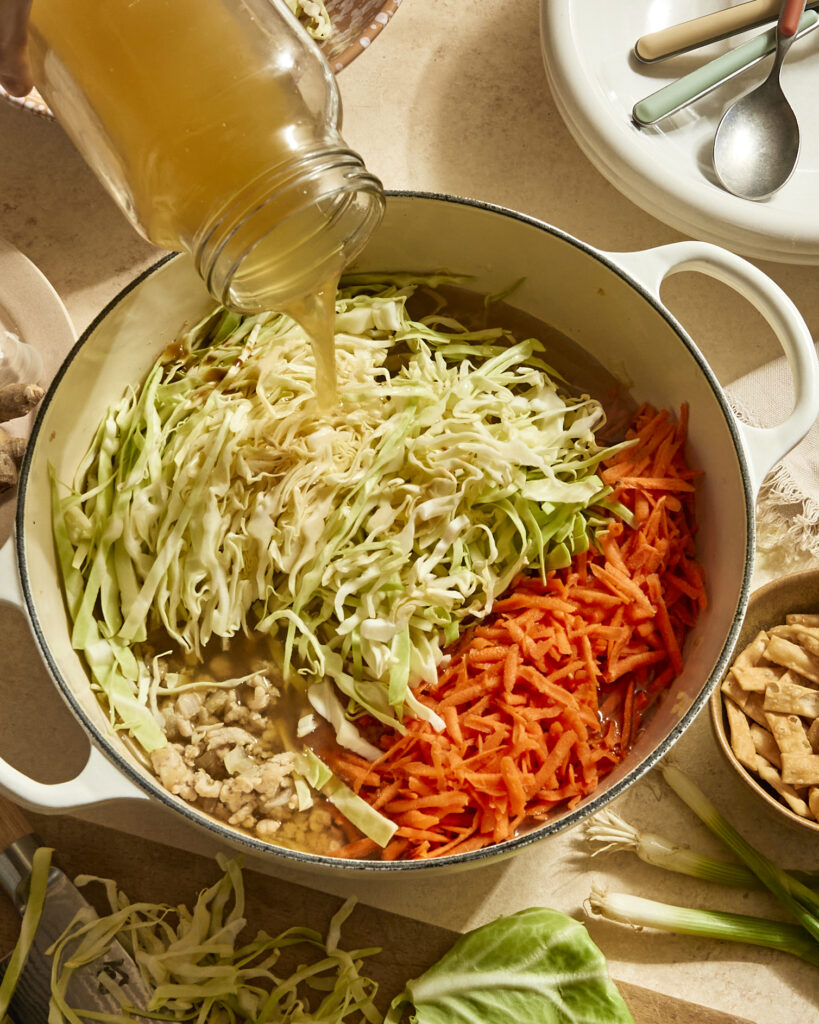
Stir in cabbage and carrots. Cook for a few minutes until the vegetables begin to soften.
Step 4. Add Broth and Seasoning
Pour in chicken broth, soy sauce, sesame oil, and a splash of rice vinegar if using. Stir well.
Step 5. Simmer the Soup
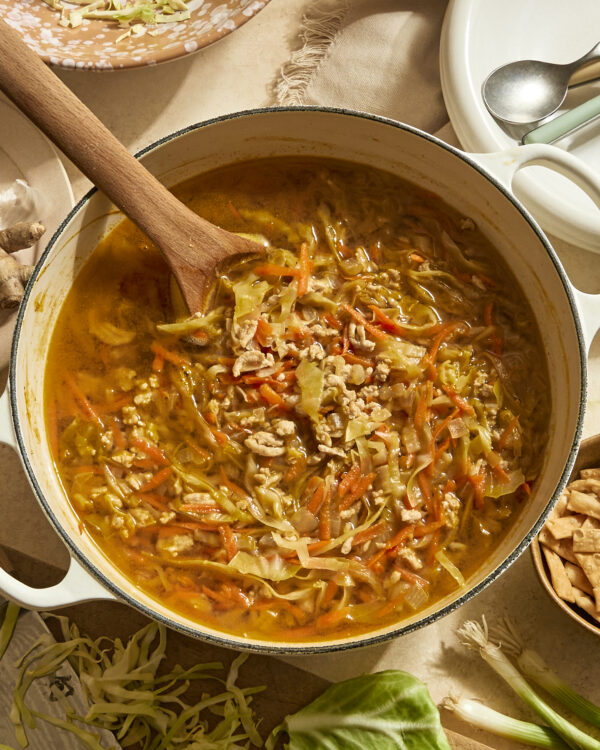
Bring to a gentle simmer and cook for 15–20 minutes, until cabbage is tender and flavors are well combined.
Step 6. Taste and Adjust
Taste the soup and adjust seasoning with salt, pepper, or additional soy sauce as needed.
What to Serve With Egg Roll Soup
Egg roll soup is filling enough to serve on its own. If you want to add something on the side, steamed rice or a simple cucumber salad works well. For extra crunch, some people enjoy topping the soup with crispy wonton strips or toasted sesame seeds.
Make-Ahead and Storage Tips
This soup stores very well. Keep leftovers in an airtight container in the refrigerator for up to four days. The flavors deepen over time, making it even better the next day.
Egg roll soup also freezes well. Let it cool completely before freezing, and thaw overnight in the refrigerator before reheating gently on the stove.
Common Mistakes to Avoid
Overcooking the cabbage is the most common mistake. It should be tender but still have structure. Another issue is adding too much soy sauce early, which can make the soup overly salty. Start light and adjust at the end.
Skipping fresh ginger is another missed opportunity. It adds warmth and depth that dried versions cannot fully replace.
FAQs
Is egg roll soup spicy?
No, it is savory rather than spicy. Heat can be added if desired.
Can I make this soup low-carb?
Yes. It is naturally low in carbs without noodles or rice.
Can I make it vegetarian?
Yes. Use mushrooms instead of meat and vegetable broth.
Does this taste like an egg roll?
Yes. The flavor profile closely mirrors classic egg roll filling.
Final Thoughts
Egg roll soup delivers bold, familiar flavors in a form that fits real life. It is quick, flexible, and deeply comforting without being heavy or greasy. If you enjoy takeout-style flavors but want something lighter and homemade, this soup strikes that balance perfectly—and does it with very little effort.

Egg Roll Soup
Ingredients
Equipment
Method
- Heat olive oil in a large pot over medium heat.
- Add ground meat and cook until browned, breaking it apart as it cooks. Drain excess fat if needed.
- Stir in onion, garlic, and ginger and cook for 2–3 minutes until fragrant.
- Add cabbage and carrots, stirring until they begin to soften.
- Pour in chicken broth, soy sauce, sesame oil, and rice vinegar if using.
- Bring to a gentle simmer and cook for 15–20 minutes, until the cabbage is tender.
- Season with black pepper and additional salt if needed.
- Serve hot, garnished with green onions if desired.
Video
Notes
- Fresh garlic and ginger make a noticeable difference in flavor.
- For a vegetarian version, replace meat with mushrooms and use vegetable broth.
- Avoid overcooking to keep the cabbage tender, not mushy.

