
Salmon and Spinach Pasta (Creamy, Balanced, and Dinner-Ready)

Salmon and spinach pasta is the kind of dinner that feels put-together without being complicated. It’s rich but not heavy, comforting without being dull, and structured enough to actually satisfy. The combination works because each ingredient has a clear role: salmon brings richness and protein, spinach adds freshness, and the pasta ties everything together into a complete meal.
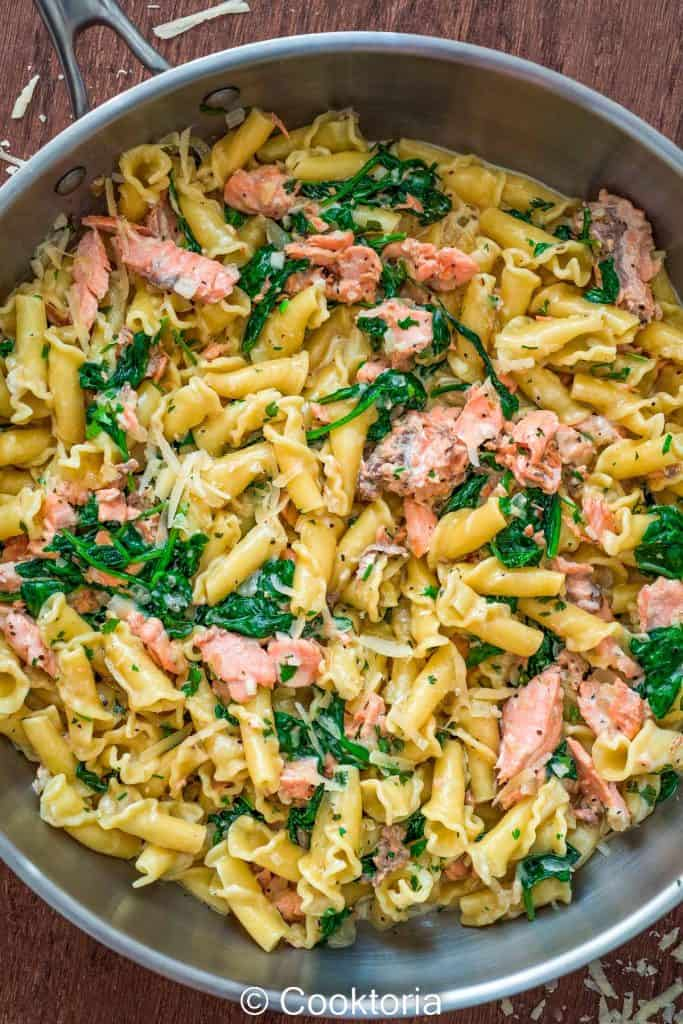
This recipe is designed for real weeknights. No overbuilt sauce, no unnecessary steps, and no fragile timing. When done correctly, the salmon stays tender, the spinach melts naturally into the dish, and the sauce coats the pasta instead of drowning it.
Why This Recipe Works / Why People Love It
This recipe works because it respects balance. Salmon is naturally rich, so the sauce stays light. Spinach cuts through that richness and keeps the dish from feeling heavy. Pasta provides structure and comfort without turning the meal into a carb overload.
People love this dish because it feels versatile and reliable. It’s good enough for guests, practical enough for a weekday, and forgiving enough that small variations won’t break it. It also reheats better than many cream-based pastas when handled properly.
Flavor and Texture You Can Expect
The flavor is savory and gently creamy with clean, fresh notes. Salmon brings depth, garlic adds aroma, and the sauce stays smooth without masking the fish. Spinach adds a mild earthiness that keeps the dish balanced.
Texture is where this dish shines. The salmon is flaky and tender, the pasta is al dente, and the spinach softens just enough to blend in without disappearing. Every bite feels cohesive rather than heavy or greasy.
Ingredients
Salmon and spinach pasta doesn’t need many ingredients, but quality matters. Because the flavors are straightforward, shortcuts show up immediately.
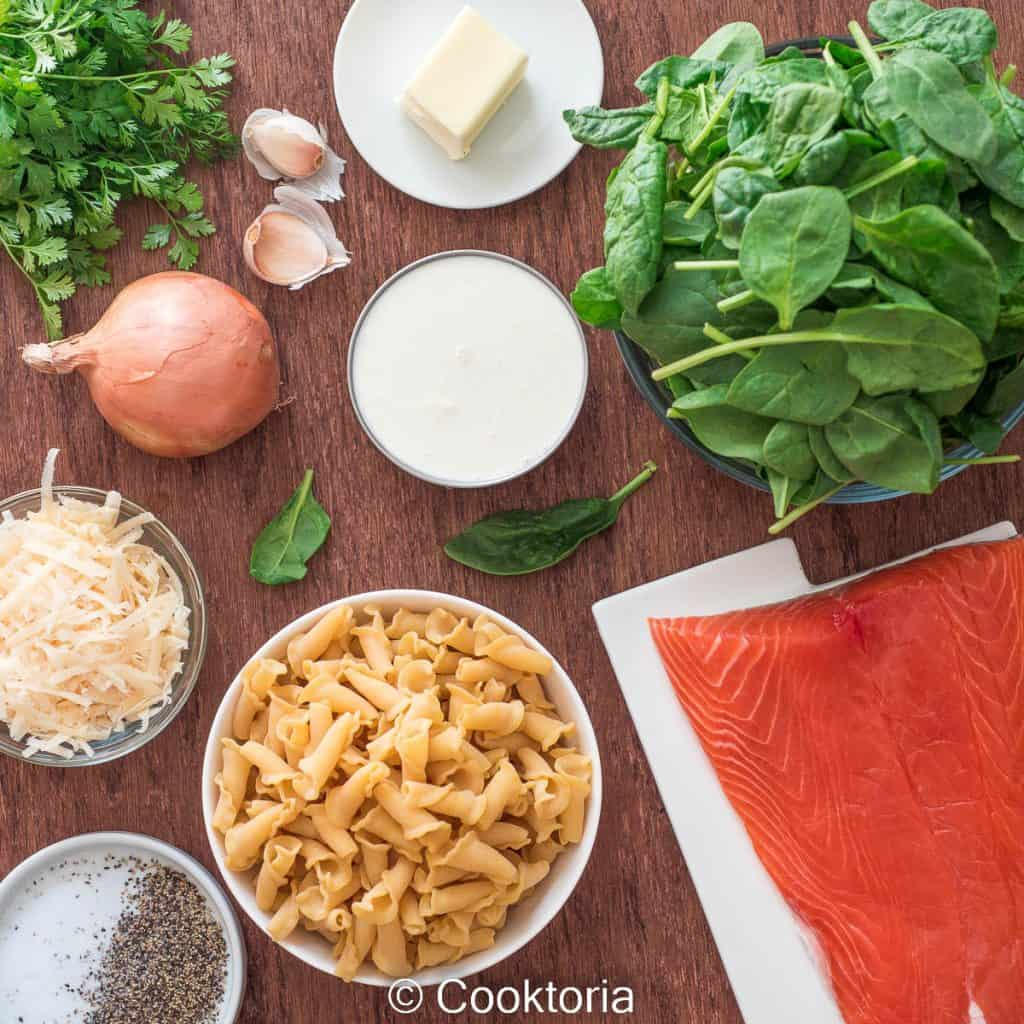
Salmon provides richness and protein and should be cooked gently to avoid drying out. Spinach adds freshness and contrast. Pasta carries the sauce. Cream or broth builds a light sauce that binds everything together without overpowering the salmon.
- Salmon fillets, skin removed
- Olive oil
- Salt and black pepper
- Pasta (fettuccine, penne, or linguine work well)
- Garlic, minced
- Fresh spinach
- Heavy cream or half-and-half
- Chicken or vegetable broth (optional, to loosen sauce)
- Parmesan cheese (optional)
How to Make Salmon and Spinach Pasta
Step 1. Cook the Pasta
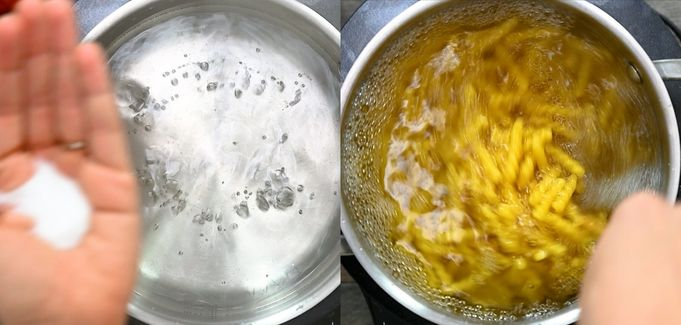
Bring a large pot of well-salted water to a boil. Cook the pasta until just al dente. Reserve about ½ cup of pasta water, then drain.
Step 2. Season the Salmon
Pat the salmon dry and season lightly with salt and black pepper. Keep seasoning simple so the fish stays the focus.
Step 3. Cook the Salmon
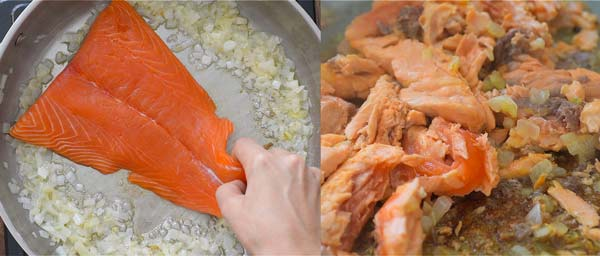
Heat olive oil in a large skillet over medium heat. Add the salmon and cook gently until just cooked through. Remove from the pan and set aside. Flake into large pieces once slightly cooled.
Step 4. Build the Sauce Base
In the same skillet, lower the heat and add garlic. Cook briefly until fragrant, being careful not to brown it.
Step 5. Add Cream and Spinach
Stir in cream and a small splash of broth or pasta water. Add spinach and cook until just wilted.
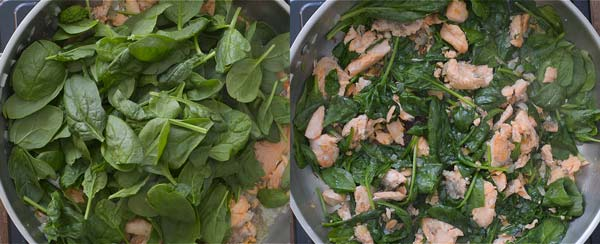
Step 6. Combine Everything
Add the cooked pasta to the skillet and toss gently. Fold in the flaked salmon, adding more pasta water if needed to loosen the sauce.
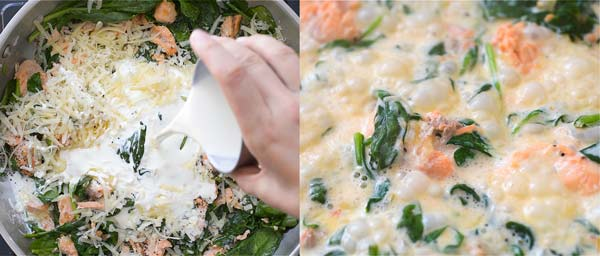
Step 7. Finish and Serve
Taste and adjust seasoning. Add parmesan if using and serve immediately.
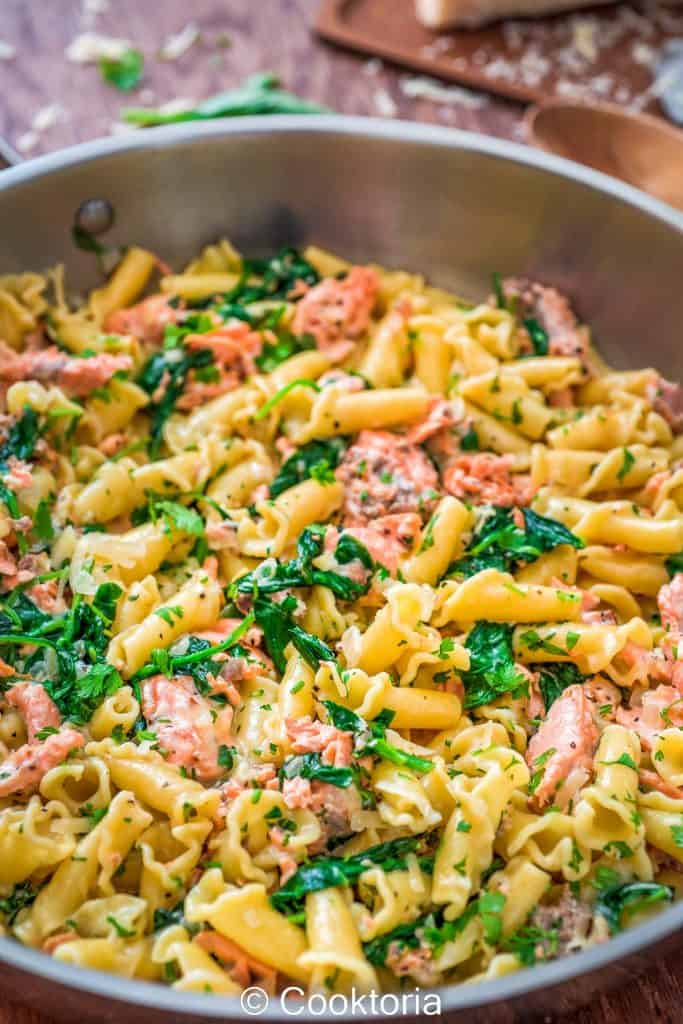
Best Pasta Choices for This Dish
Long pastas like fettuccine or linguine work well because they hold the light sauce evenly. Short pastas like penne are easier to portion and reheat. Avoid very thin pasta—it doesn’t support the salmon well.
What to Serve With It
This dish stands well on its own. If you want a side, keep it simple. A crisp green salad or roasted vegetables balance the richness without competing.
Avoid heavy bread or additional creamy sides.
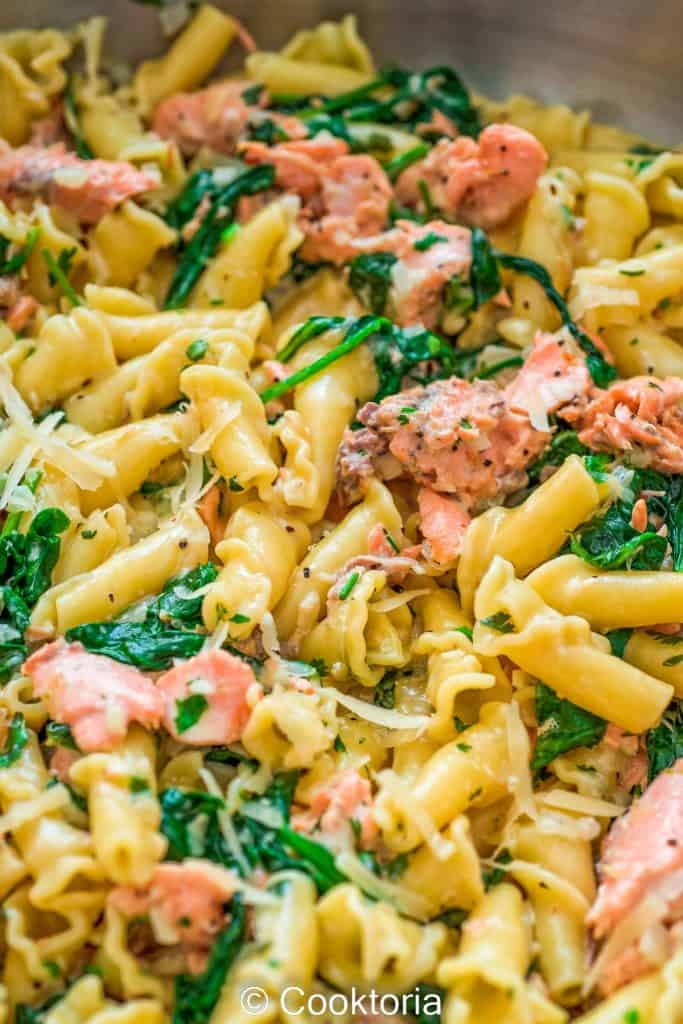
Make-Ahead and Storage Tips
Salmon and spinach pasta can be stored for up to two days. Reheat gently over low heat with a splash of water or broth to loosen the sauce. Avoid high heat, which can dry out the salmon and split the sauce.
For best texture, cook the pasta fresh if making ahead for guests.
Common Mistakes to Avoid
Overcooking the salmon is the most common mistake—it turns dry and crumbly. Another issue is using too much cream, which overwhelms the dish.
Also avoid boiling the sauce once the salmon is added. Gentle heat keeps everything smooth.
FAQs
Can I use frozen salmon?
Yes. Thaw completely and pat dry before cooking.
Is this recipe gluten-free?
Use gluten-free pasta and ensure all ingredients are certified gluten-free.
Can I use milk instead of cream?
Yes, but the sauce will be lighter and less rich.
Does this reheat well?
It does, if reheated gently with added liquid.
Final Thoughts
Salmon and spinach pasta is a strong example of how simple ingredients can create a balanced, satisfying dinner. When handled with restraint and proper timing, it delivers richness, freshness, and comfort in one bowl.
This is the kind of recipe that earns repeat status—not because it’s flashy, but because it works every time.

Salmon and Spinach Pasta
Ingredients
Equipment
Method
- Bring a large pot of salted water to a boil. Cook pasta until just al dente. Reserve ½ cup pasta water, then drain.
- Pat salmon dry and season lightly with salt and black pepper.
- Heat olive oil in a large skillet over medium heat. Add salmon and cook gently until just cooked through. Remove from the pan and flake into large pieces.
- Lower the heat. In the same skillet, add garlic and cook briefly until fragrant, without browning.
- Stir in cream and broth or pasta water. Add spinach and cook until just wilted.
- Add cooked pasta to the skillet and toss gently. Fold in flaked salmon, adding more pasta water if needed to loosen the sauce.
- Taste and adjust seasoning. Sprinkle with parmesan if using and serve immediately.
Notes
- Do not overcook the salmon—it should stay tender and flaky.
- Keep the sauce light so it coats the pasta without overpowering the fish.
- Reheat gently with added liquid to maintain texture.

