
Salmon With Sauce Recipe (Easy, Flavor-Packed & Restaurant-Style)

A salmon with sauce recipe is one of the best ways to turn a simple salmon fillet into a rich, satisfying dinner. While salmon is naturally flavorful on its own, the right sauce enhances its texture and taste, making the dish feel more indulgent and restaurant-quality.
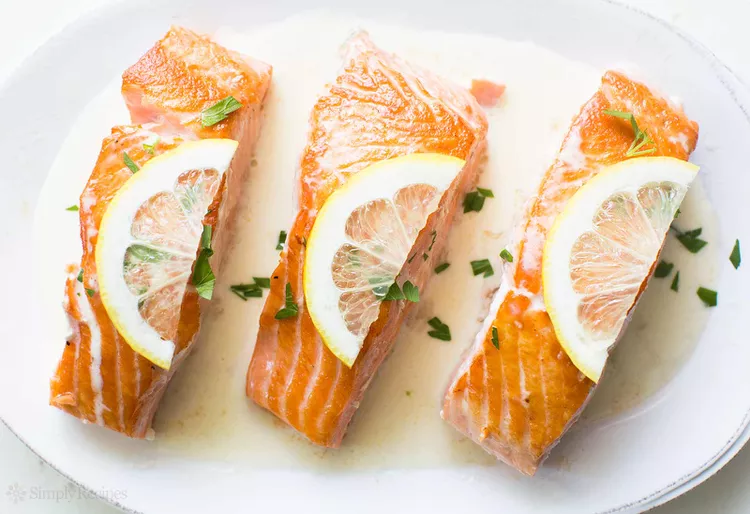
From creamy sauces to light lemon-based or garlic butter options, salmon pairs beautifully with a wide range of flavors. This recipe focuses on creating perfectly cooked salmon and pairing it with a versatile sauce that works for weeknight dinners, meal prep, or special occasions.
Why Salmon With Sauce Is So Popular
Salmon with sauce is popular because it balances richness and freshness in one dish. The natural oils in salmon create a moist, tender texture, while sauces add depth, contrast, and variety. A well-made sauce can turn plain salmon into a standout meal without requiring complicated techniques. Another reason this recipe is loved is flexibility—you can adjust the sauce based on personal taste, dietary needs, or available ingredients, making it suitable for a wide range of meals.
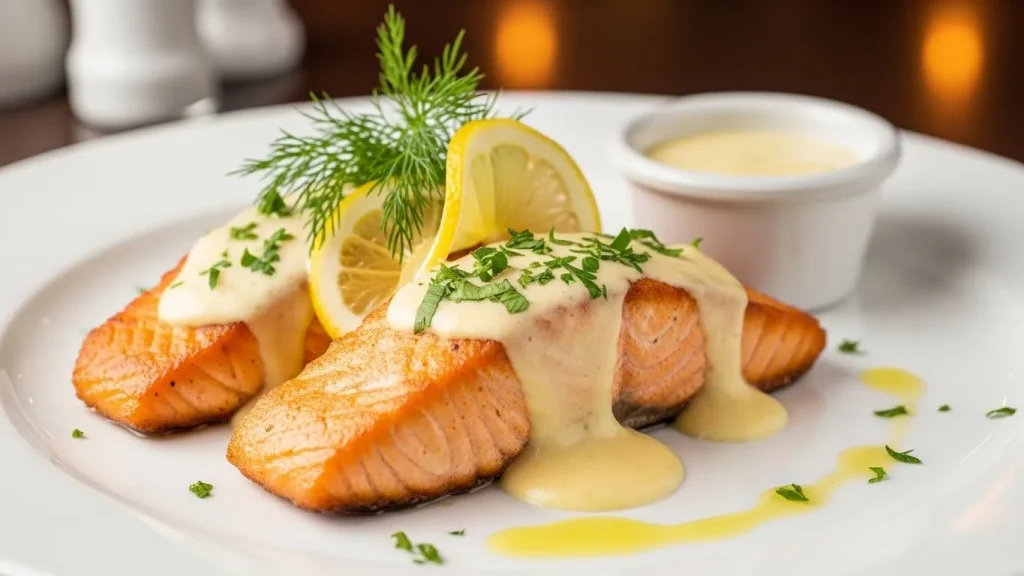
Ingredients for Salmon With Sauce Recipe
The salmon should be seasoned simply so it can pair well with different sauces. High-quality fillets and basic spices allow the sauce to shine without overpowering the fish.
- Salmon fillets
- Olive oil or butter
- Salt and black pepper
- Paprika or garlic powder

These ingredients form the foundation of a versatile sauce. You can adjust quantities or swap elements to create different flavor profiles.
- Butter or olive oil
- Garlic cloves
- Heavy cream or broth
- Lemon juice or Dijon mustard
- Parmesan cheese or fresh herbs
How to Make Salmon With Sauce
Prepare and Season the Salmon
Start by patting the salmon fillets dry with paper towels. This step is essential for proper cooking and better texture. Season both sides with salt, pepper, and paprika or garlic powder. Letting the salmon rest briefly after seasoning helps the flavors absorb evenly and ensures better results when cooking.
Cook the Salmon Properly
Salmon can be pan-seared, baked, or grilled. Pan-searing over medium heat creates a golden crust and locks in moisture, while baking offers even, hands-off cooking. The salmon is ready when it turns opaque and flakes easily with a fork. Remove it from heat promptly to avoid dryness.
Make the Sauce
In the same pan used for the salmon, add butter or oil and sauté garlic until fragrant. Add cream or broth and allow it to simmer gently. Stir in lemon juice, mustard, or cheese depending on the desired flavor. The sauce should be smooth and slightly thick, coating the back of a spoon.
Combine Salmon and Sauce
Return the salmon to the pan and spoon the sauce over the fillets. Let everything simmer briefly so the flavors come together. This step allows the salmon to absorb some of the sauce without overcooking.
Expert Tips
Do Not Overcook the Salmon
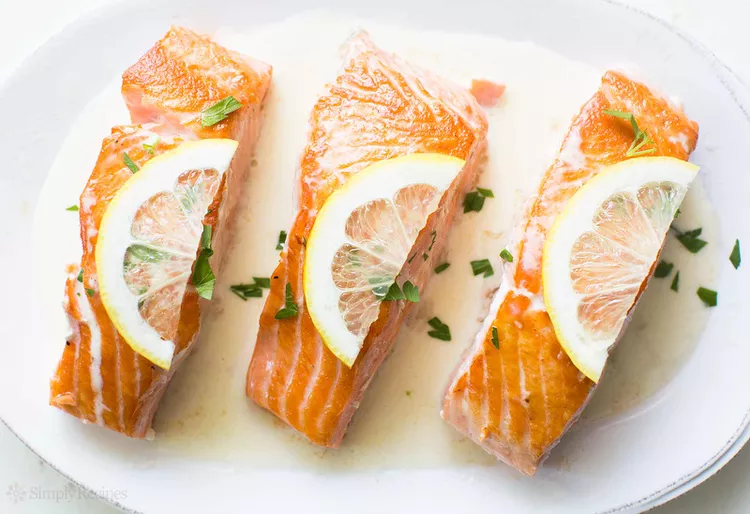
Salmon cooks quickly, and overcooking leads to a dry texture. Always remove it from heat as soon as it flakes easily. Slightly undercooking is better, as residual heat will finish the cooking process.
Use Low Heat for the Sauce
Sauces, especially cream-based ones, should be cooked gently. High heat can cause separation or curdling, which affects texture and appearance.
Balance Richness With Acidity
Adding lemon juice or a small amount of vinegar helps balance rich sauces and prevents the dish from feeling heavy. Acidity brightens the overall flavor.
Season Gradually
It’s best to season in small amounts and taste as you go. This prevents the sauce from becoming too salty or overpowering the salmon.
Rest the Salmon Before Serving
Allow the salmon to rest for a few minutes before serving. This helps retain juices and improves texture.
Popular Sauce Variations for Salmon
Creamy Garlic Sauce
A creamy garlic sauce made with butter, cream, and Parmesan creates a rich, comforting dish that pairs well with pasta or rice.
Lemon Butter Sauce
This light, bright sauce enhances the natural flavor of salmon without overpowering it. It’s perfect for simple dinners and lighter meals.
Dijon Mustard Sauce
Dijon mustard adds tang and depth, creating a bold but balanced sauce that works well with roasted vegetables.
Honey Garlic Sauce
A sweet and savory option that caramelizes slightly and adds a glossy finish to the salmon.
Herb Sauce
Fresh herbs blended with butter or olive oil create a fragrant, fresh sauce ideal for spring and summer meals.
Serving Suggestions
Salmon with sauce pairs well with rice, pasta, mashed potatoes, or roasted vegetables. Lighter sauces work best with salads or steamed vegetables, while creamier sauces pair better with hearty sides. Garnish with fresh herbs or lemon slices for a clean, professional presentation.
Storage and Reheating
Refrigerator
Store leftover salmon and sauce in an airtight container for up to 2–3 days. Keeping the salmon submerged in sauce helps prevent dryness.
Reheating
Reheat gently over low heat or in the oven. Add a splash of broth or cream if the sauce thickens too much during storage.
Meal Prep Tip
Salmon with sauce can be prepared in advance, but it’s best enjoyed fresh. If meal prepping, slightly undercook the salmon to prevent dryness when reheated.
Frequently Asked Questions
What sauce goes best with salmon?
Creamy garlic, lemon butter, Dijon mustard, and herb sauces all pair well with salmon.
Can I make salmon sauce ahead of time?
Yes, most sauces can be made in advance and reheated gently before serving.
Is salmon with sauce healthy?
Yes, especially when using lighter sauces and controlling portion sizes.
Can I bake salmon with sauce?
Yes, salmon can be baked directly in sauce for a hands-off cooking method.
How do I keep salmon moist in sauce?
Avoid overcooking and keep the salmon coated in sauce during reheating.
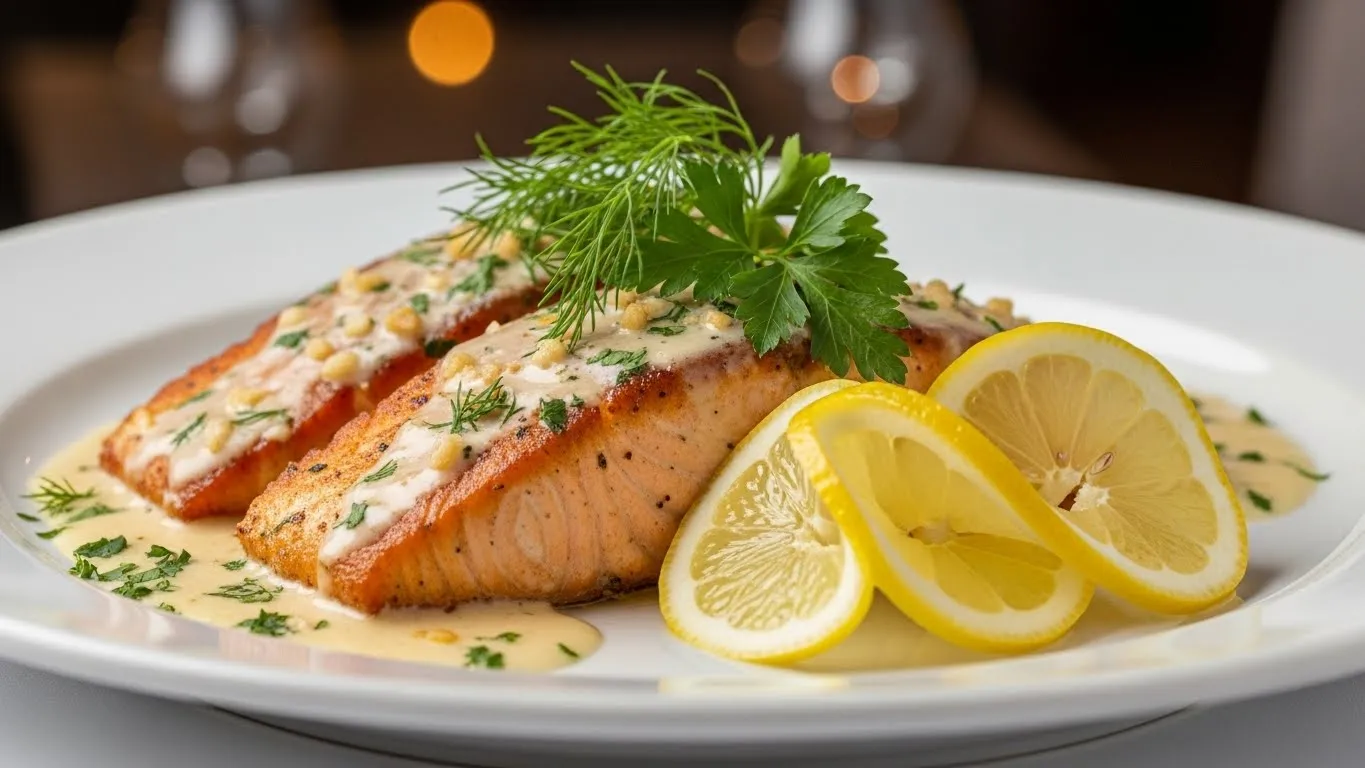

Salmon With Sauce
Ingredients
Equipment
Method
- Pat salmon fillets dry. Season both sides with salt, black pepper, and paprika or garlic powder.
- Heat olive oil or butter in a skillet over medium heat. Cook salmon skin-side down for 4–5 minutes, then flip and cook 2–3 minutes more until opaque and flaky. Remove salmon and set aside.
- In the same skillet, add butter or oil and sauté garlic until fragrant. Pour in cream or broth and simmer gently for 2–3 minutes.
- Stir in lemon juice or Dijon mustard and Parmesan cheese if using. Adjust seasoning to taste.
- Return salmon to the skillet and spoon sauce over the fillets. Simmer briefly, then remove from heat and garnish with fresh herbs.
Video
Notes
Keep sauce heat low to prevent curdling.
Lemon juice balances rich sauces and adds freshness.
For a lighter version, use broth instead of cream.
Serve with rice, pasta, or roasted vegetables.

