
Tuscan Sausage Pasta Recipe (Creamy, Savory, and Comfort-Driven)

Tuscan sausage pasta is the kind of dinner that feels indulgent without being overdone. It’s rich, comforting, and deeply savory, but still structured enough to feel like a proper meal—not a bowl of sauce with noodles. When done right, this dish balances creamy texture, bold sausage flavor, and fresh elements that keep it from feeling heavy.
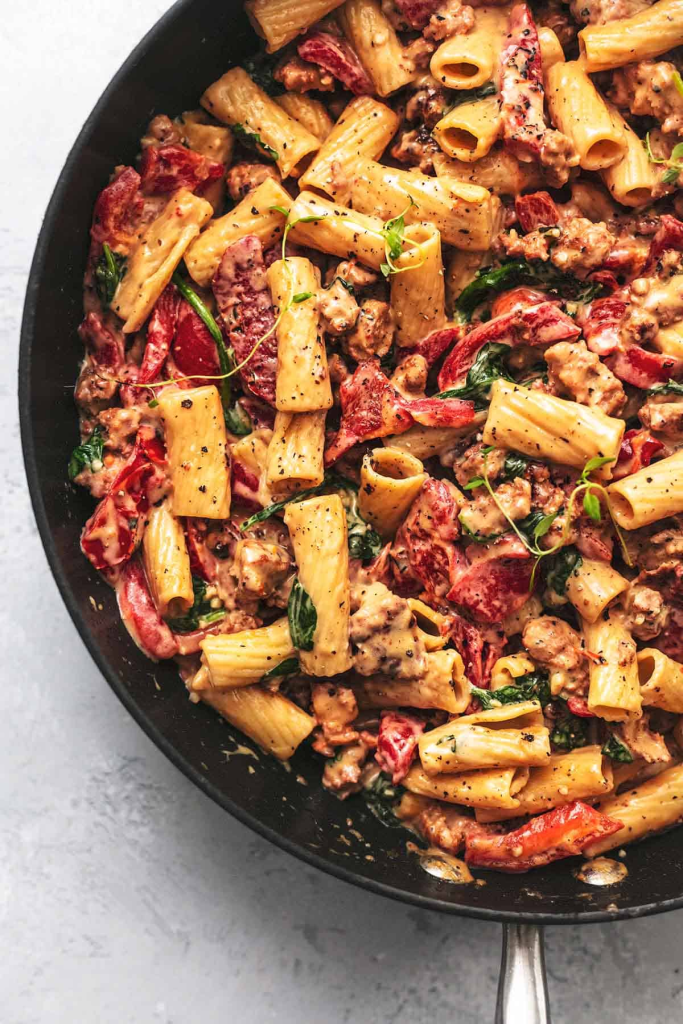
This recipe is built around Italian-style sausage as the anchor. The sausage seasons the entire dish, which means the sauce doesn’t need excessive seasoning or complicated steps. Cream adds body, tomatoes bring acidity, and spinach rounds everything out so the final plate feels complete and intentional.
This is a real dinner recipe—filling, reliable, and worth repeating.
Why This Recipe Works
This recipe works because it lets the sausage do the heavy lifting. Italian sausage is already seasoned with herbs and spices, which builds depth quickly without extra effort. Cooking the sausage first creates a flavor base that carries through the entire dish.
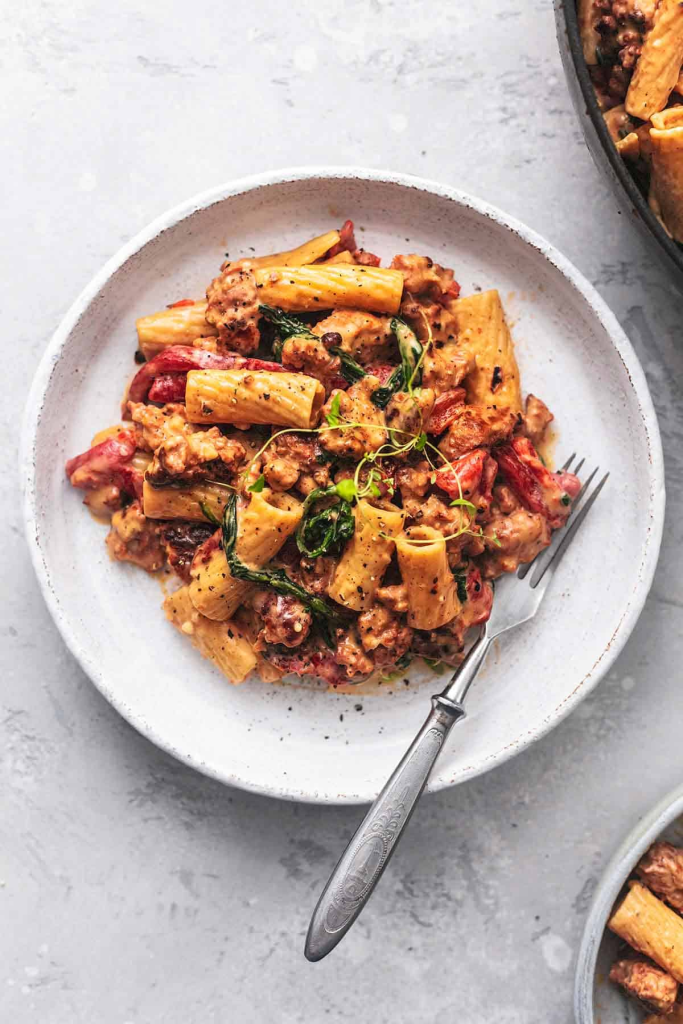
People love Tuscan sausage pasta because it delivers comfort without chaos. It’s creamy but balanced, hearty but not overwhelming. It also scales well, making it just as good for family dinners as it is for leftovers the next day.
Flavor and Texture You Can Expect
The flavor is savory and layered. You’ll taste garlic, herbs, and sausage first, followed by the gentle richness of cream and the brightness of tomatoes. Spinach adds a mild earthiness that keeps the dish grounded.
Texture is one of the biggest strengths here. The sausage is hearty and satisfying, the pasta is tender but structured, and the sauce coats everything without pooling or feeling greasy.
Ingredients
Tuscan sausage pasta relies on a short list of strong ingredients. Because the sauce is simple, each component needs to be treated with care.
Sausage provides flavor and protein. Pasta carries the sauce and makes the dish filling. Cream builds richness, while tomatoes balance it with acidity. Spinach adds freshness and color without overpowering the dish.
- Italian sausage (mild or spicy)
- Olive oil
- Onion, finely chopped
- Garlic, minced
- Pasta (penne, rigatoni, or fettuccine)
- Heavy cream
- Sun-dried tomatoes or cherry tomatoes
- Fresh spinach
- Salt and black pepper
- Red pepper flakes (optional)
- Grated parmesan cheese (optional)
How to Make Tuscan Sausage Pasta
Step 1. Cook the Pasta
Bring a large pot of well-salted water to a boil. Cook the pasta until just al dente. Reserve about ½ cup of pasta water, then drain.
Step 2. Brown the Sausage
Heat olive oil in a large skillet over medium heat. Add the sausage and cook, breaking it up, until browned and cooked through. Remove excess grease if needed.
Step 3. Build the Flavor Base
Add onion to the skillet and cook until softened. Stir in garlic and cook briefly until fragrant.
Step 4. Create the Sauce
Lower the heat and stir in heavy cream. Add sun-dried tomatoes or cherry tomatoes and let the sauce simmer gently until slightly thickened.
Step 5. Add Spinach
Add spinach to the skillet and cook just until wilted. This should only take a minute or two.
Step 6. Combine Everything
Add the cooked pasta to the skillet along with a splash of reserved pasta water. Toss gently until the sauce coats the pasta evenly.
Step 7. Finish and Serve
Season with salt, black pepper, and red pepper flakes if using. Finish with parmesan cheese and serve warm.
Best Pasta Choices for This Recipe
Short, sturdy pasta shapes like penne or rigatoni work best because they hold the creamy sauce and sausage pieces evenly. Long pasta works too but requires more careful tossing.
Avoid very thin pasta—it doesn’t stand up well to the richness of the sauce.
What to Serve With Tuscan Sausage Pasta
This dish is rich enough to stand on its own. If you want a side, go light. A simple green salad or roasted vegetables balance the creaminess without competing.
Bread is optional, not necessary.
Make-Ahead and Storage Tips
Tuscan sausage pasta keeps well in the refrigerator for up to three days. Reheat gently with a splash of water or cream to loosen the sauce.
Avoid reheating on high heat, which can cause the sauce to tighten or separate.
Common Mistakes to Avoid
Using too much cream makes the dish heavy and dull. Skipping the browning step on the sausage reduces flavor significantly. Overcooking the pasta leads to a mushy texture that doesn’t hold sauce well.
Let the sausage and sauce lead—don’t overcomplicate it.
FAQs
Can I use chicken sausage instead of pork?
Yes. Chicken sausage works well and makes the dish slightly lighter.
Is this recipe gluten-free?
Use gluten-free pasta and ensure the sausage is certified gluten-free.
Can I make this spicy?
Use spicy Italian sausage or add red pepper flakes.
Does this reheat well?
Yes, when reheated gently with added liquid.
Final Thoughts
Tuscan sausage pasta is comfort food done with restraint. It’s creamy, savory, and deeply satisfying without being messy or overbuilt. When you let quality sausage, simple ingredients, and proper timing do the work, you get a dinner that feels reliable and indulgent at the same time.
This is the kind of recipe that earns a permanent place in your rotation—not because it’s flashy, but because it works every single time.
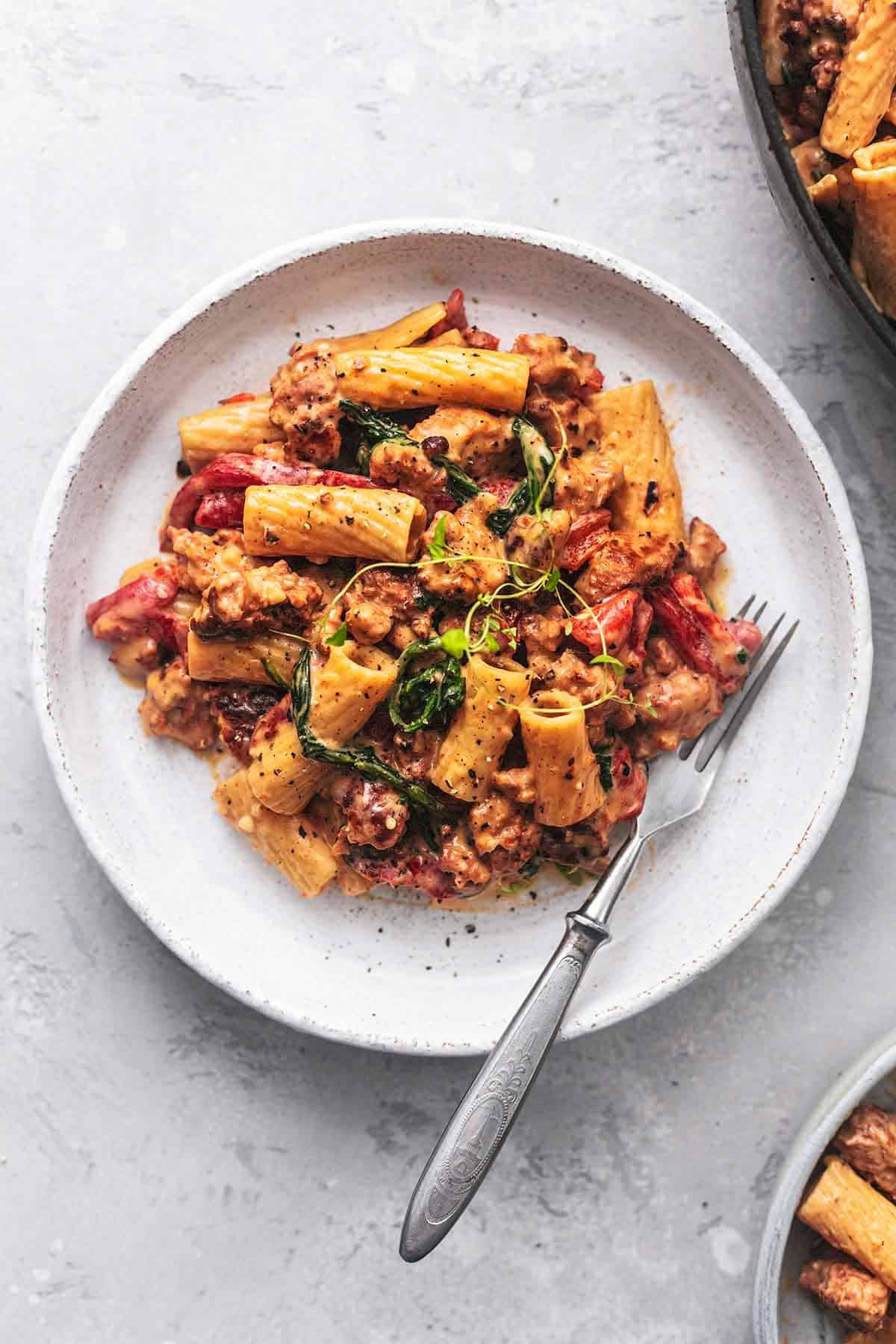

Tuscan Sausage Pasta
Ingredients
Equipment
Method
- Bring a large pot of well-salted water to a boil. Cook pasta until just al dente. Reserve ½ cup pasta water, then drain.
- Heat olive oil in a large skillet over medium heat. Add sausage and cook, breaking it up, until browned and fully cooked. Drain excess grease if needed.
- Add onion to the skillet and cook until softened. Stir in garlic and cook briefly until fragrant.
- Lower the heat and stir in heavy cream and tomatoes. Simmer gently until the sauce begins to thicken.
- Add spinach and cook just until wilted.
- Add cooked pasta to the skillet with a splash of reserved pasta water. Toss gently until evenly coated.
- Season with salt, black pepper, and red pepper flakes if using. Top with parmesan if desired and serve warm.
Notes
- Browning the sausage first builds most of the flavor—don’t rush this step.
- Keep heat low once cream is added to prevent splitting.
- Reheat gently with a splash of water or cream to loosen the sauce.

