
Salmon with Mango Salsa (Fresh, Bright, and Perfectly Balanced)

Salmon with mango salsa is a dish that highlights the contrast between rich seafood and bright tropical flavors. The natural richness of salmon pairs exceptionally well with the sweetness and acidity of fresh mango, creating a balanced meal that feels both refreshing and satisfying.
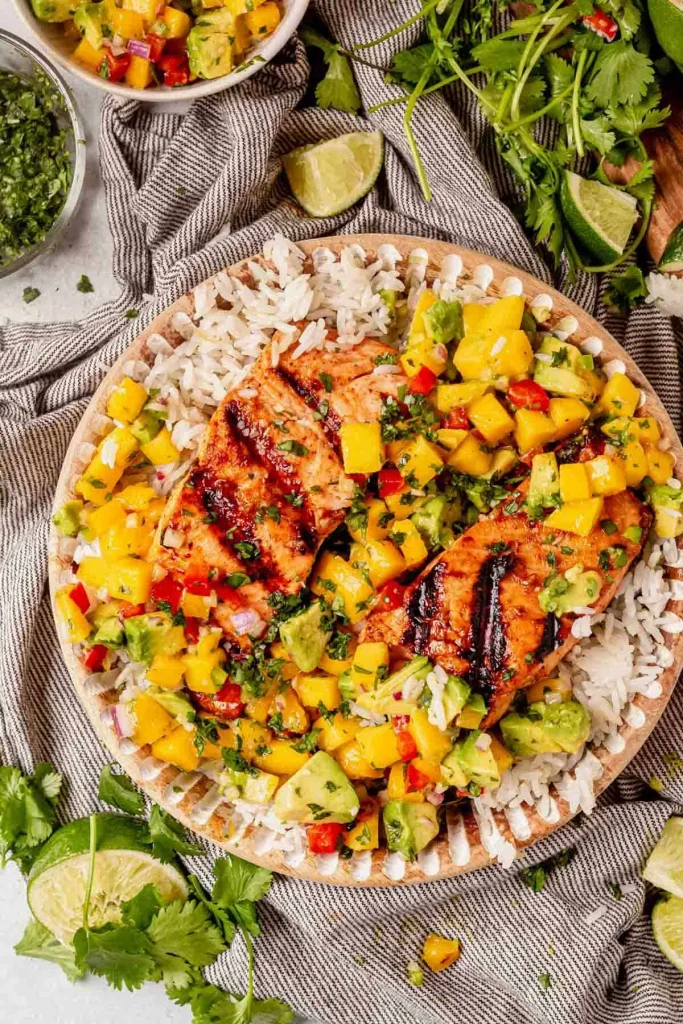
This recipe works particularly well because it keeps the preparation simple. Salmon is cooked just long enough to remain tender and flaky, while the mango salsa provides a vibrant topping made from fresh fruit, herbs, and citrus. The result is a dish that looks colorful on the plate and delivers clean, layered flavors. It works well for weeknight dinners, light lunches, or warm-weather meals where fresh ingredients are the focus.
Why This Recipe Works
This recipe succeeds because it balances richness with freshness. Salmon is naturally oily and flavorful, which makes it ideal for pairing with bright and slightly sweet ingredients. Mango salsa introduces acidity, sweetness, and texture. The citrus juice enhances the flavor of both the fish and the fruit while preventing the salsa from feeling overly sweet.
Cooking the salmon simply—usually by pan-searing, baking, or grilling—allows its natural flavor to remain the centerpiece of the dish. Another strength of this recipe is how quickly it comes together. While the salmon cooks, the salsa can be prepared in minutes, making the dish practical for everyday cooking.
Flavor and Texture You Can Expect
The flavor profile combines savory, sweet, and slightly tangy notes. Salmon delivers a rich and buttery flavor that is complemented by the sweetness of ripe mango. Lime juice adds brightness while red onion introduces a mild sharpness that keeps the salsa lively. Fresh herbs such as cilantro add a subtle herbal note that ties everything together.
Texture is equally important. The salmon should be flaky and tender, while the salsa provides juicy mango pieces and light crunch from onion and peppers. Each bite offers a mix of warm fish and cool, refreshing salsa.
Ingredients
Salmon is the star of the dish and provides the primary protein. Fresh salmon fillets work best because they maintain moisture and flavor during cooking. Mango adds natural sweetness and juicy texture. A ripe mango should be soft but not mushy.
Red onion contributes a mild bite that balances the sweetness of the fruit. Lime juice brightens the entire dish and enhances both the fish and salsa. Cilantro adds freshness and aroma, while a small amount of olive oil helps the salmon cook evenly.
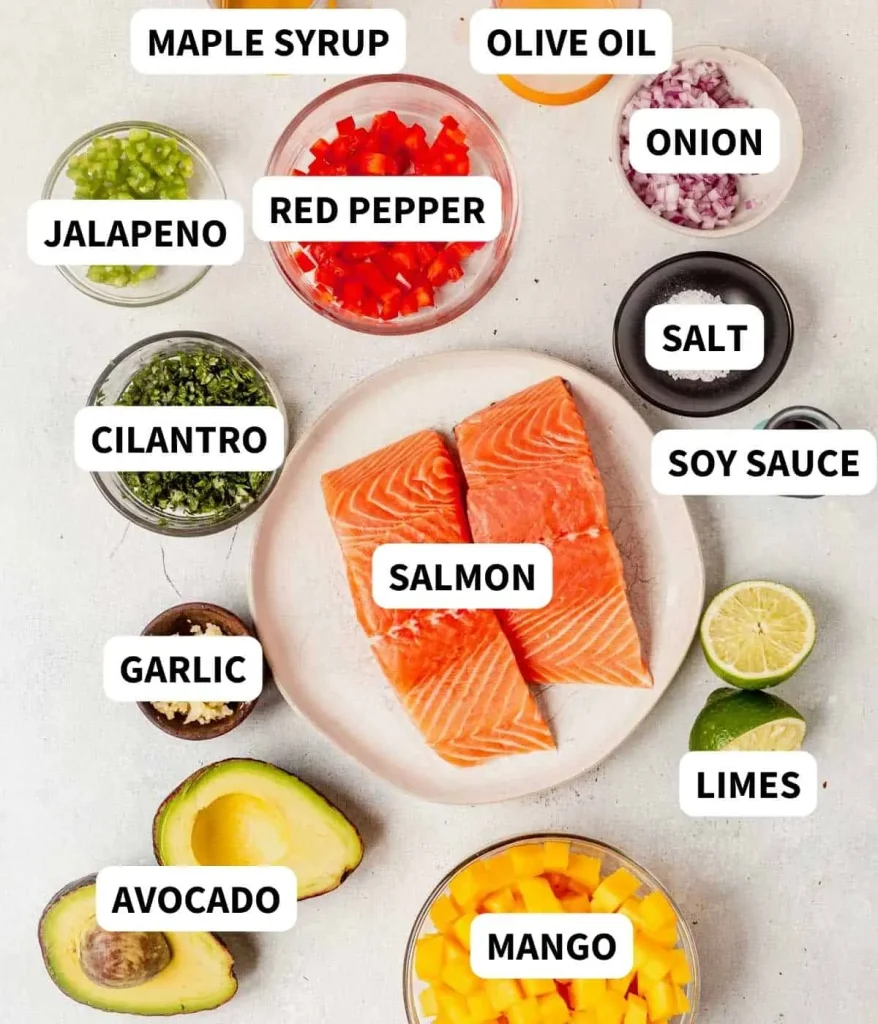
- Salmon fillets
- Olive oil
- Salt
- Black pepper
- Ripe mango, diced
- Red onion, finely diced
- Fresh cilantro, chopped
- Lime juice
- Jalapeño, finely chopped (optional)
How to Make Salmon with Mango Salsa
Step-by-Step Instructions
Step 1. Prepare the Mango Salsa
In a mixing bowl, combine diced mango, red onion, chopped cilantro, lime juice, and optional jalapeño. Stir gently to combine. Set the salsa aside so the flavors can blend.
Step 2. Season the Salmon
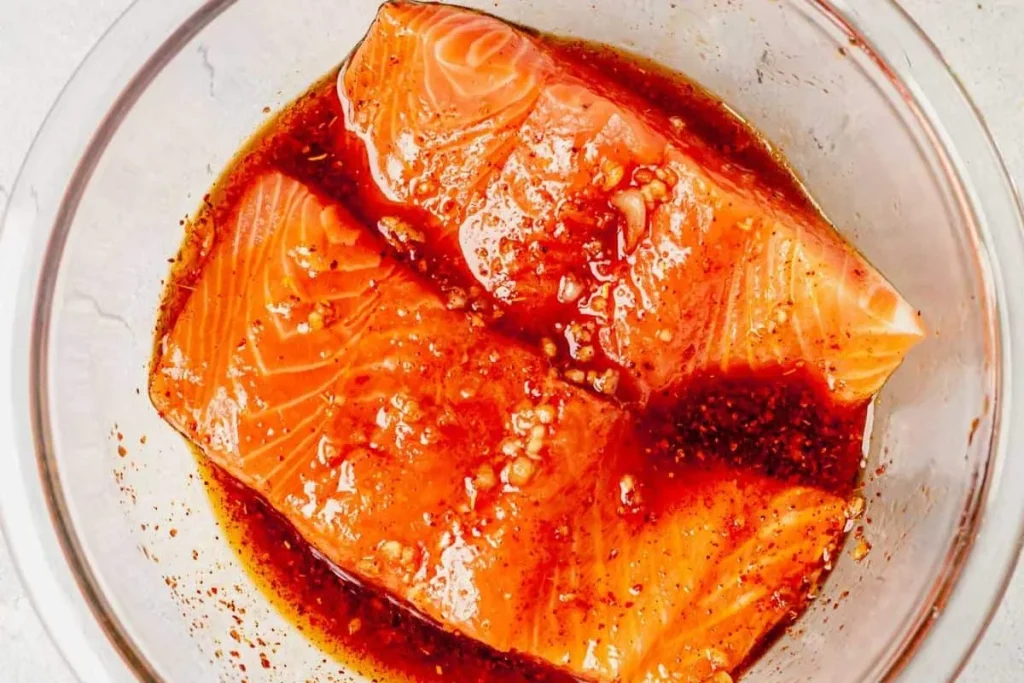
Pat the salmon fillets dry with paper towels. Season both sides with salt and black pepper.
Step 3. Heat the Pan
Heat olive oil in a skillet over medium-high heat.
Step 4. Cook the Salmon
Place salmon fillets skin-side down in the pan and cook for about 4–5 minutes. Flip carefully and cook another 3–4 minutes until the fish flakes easily with a fork.
Step 5. Plate the Dish
Transfer the salmon to serving plates.
Step 6. Add the Mango Salsa
Spoon generous amounts of mango salsa over the salmon fillets.
Step 7. Serve Immediately
Serve the salmon warm with the fresh salsa on top.
Best Salmon to Use
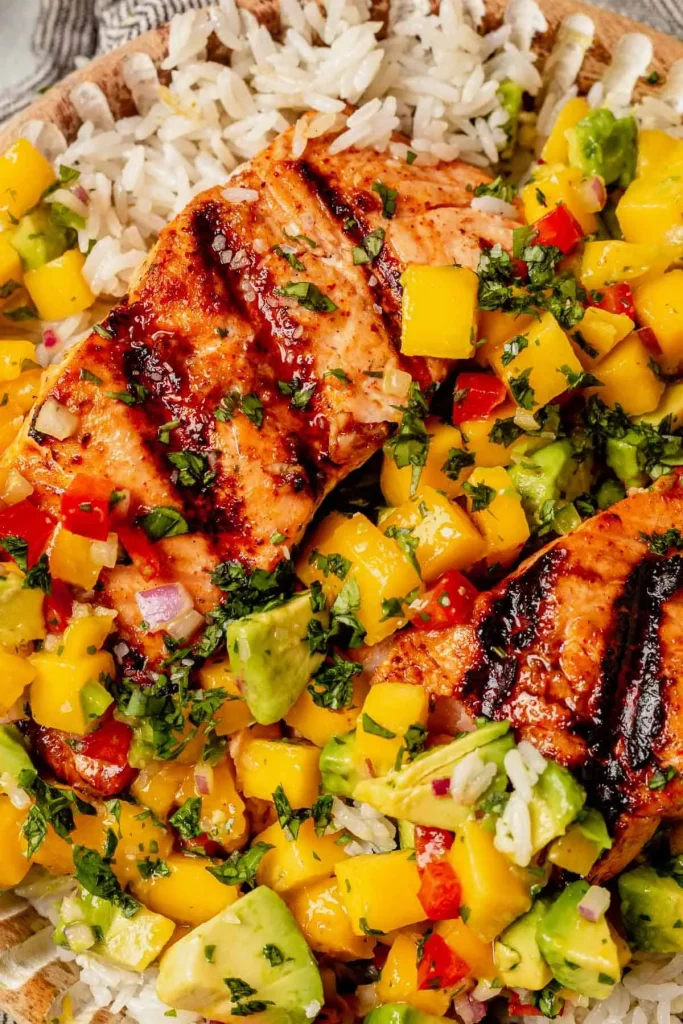
Fresh salmon fillets with the skin on are often the best option for this recipe because the skin helps protect the fish during cooking. Popular varieties include Atlantic salmon, sockeye salmon, and coho salmon. Each offers slightly different flavor intensity but works well with mango salsa. Frozen salmon can also be used if properly thawed and dried before cooking.
What to Serve With Salmon and Mango Salsa
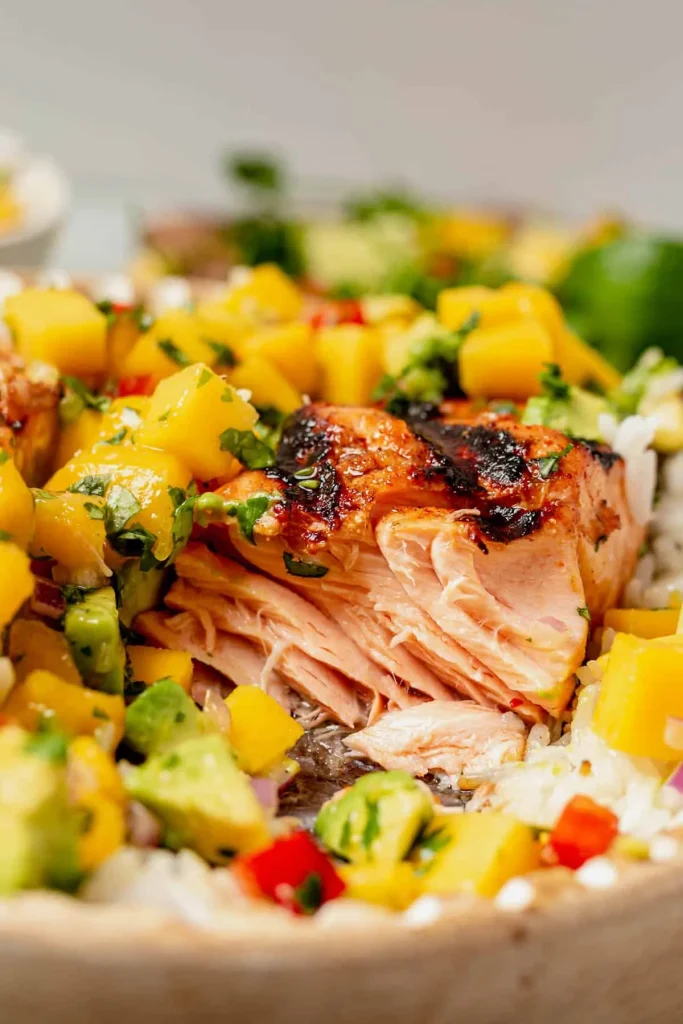
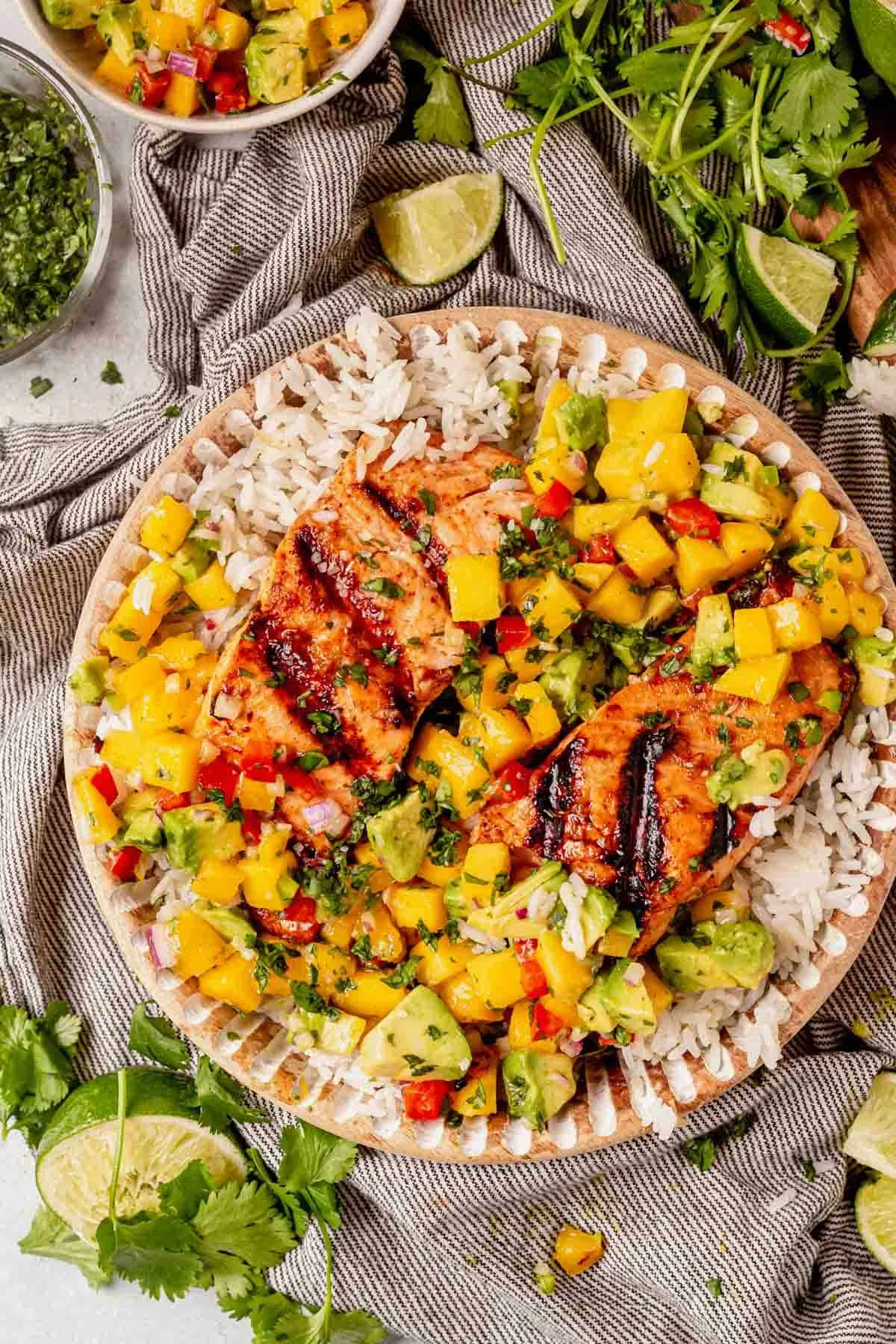
This dish pairs well with simple sides that allow the salmon and salsa to remain the focus. Steamed rice or coconut rice works well because it absorbs the juices from the salsa. Quinoa or couscous can also complement the dish. Roasted vegetables such as asparagus, zucchini, or bell peppers add color and balance. A light green salad with citrus dressing can also work well alongside the salmon.
Make-Ahead and Storage Tips
The mango salsa can be prepared several hours in advance and stored in the refrigerator. In fact, letting it rest allows the flavors to blend more fully. Salmon is best served fresh, but leftovers can be refrigerated for up to two days. When reheating salmon, use gentle heat to prevent drying.
Common Mistakes to Avoid
- Overcooking the salmon can cause it to become dry and firm. Cooking just until the fish flakes ensures the best texture.
- Using underripe mango can result in a less flavorful salsa.
- Adding too much lime juice can overpower the sweetness of the mango.
- Maintaining balance between sweetness, acidity, and savory elements is key.
FAQs
Can I grill the salmon instead of pan-searing it?
Yes, grilled salmon works very well with mango salsa and adds a smoky flavor.
Can I make the salsa ahead of time?
Yes, it can be prepared a few hours in advance and refrigerated.
What other fruits can be used?
Pineapple or peach can be substituted for mango.
Is this recipe spicy?
Only if jalapeño is added. It can easily be adjusted to taste.

Salmon with Mango Salsa
Ingredients
Equipment
Method
- In a mixing bowl, combine diced mango, red onion, cilantro, lime juice, and optional jalapeño. Stir gently and set aside.
- Pat salmon fillets dry and season both sides with salt and black pepper.
- Heat olive oil in a skillet over medium-high heat.
- Place salmon fillets skin-side down in the skillet and cook for about 4–5 minutes. Flip and cook another 3–4 minutes until the fish flakes easily with a fork.
- Transfer the cooked salmon to serving plates.
- Spoon the prepared mango salsa over the salmon fillets.
- Serve immediately with extra lime wedges if desired.
Video
Notes
- Use ripe mango for the best sweetness and texture.
- Avoid overcooking the salmon to keep it tender and flaky.
- The salsa can be made ahead and chilled for up to a few hours.
- Grilling the salmon instead of pan-searing adds a smoky flavor.

